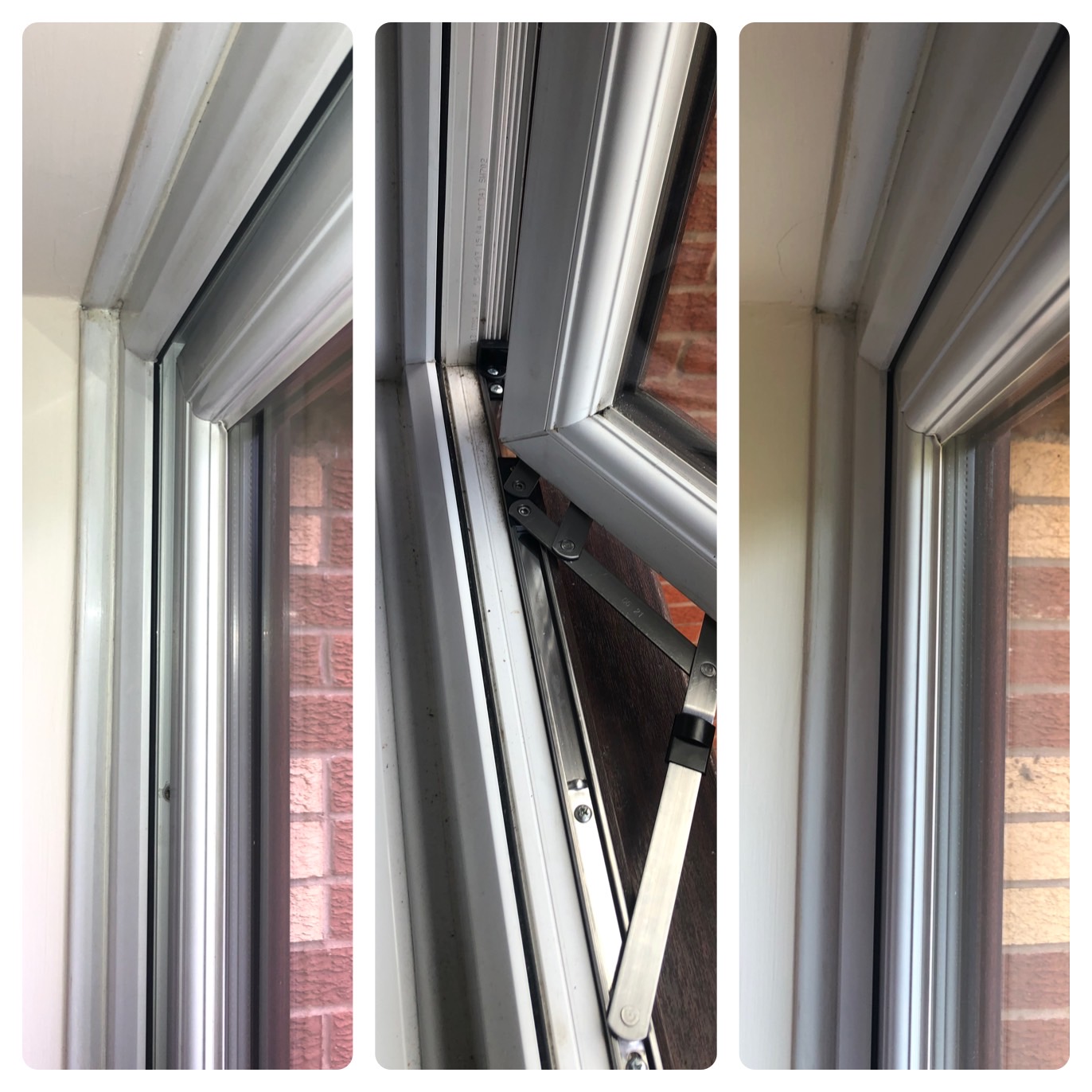
Handles and hinges that have worn
Handles and hinges are used every day and can become loose, stiff, noisy or unreliable. A handle may turn without moving the lock, fail to return or feel loose on the spindle. A hinge or stay may allow an opening light to drop, catch or sit unevenly. We inspect the hardware and the frame so the replacement or adjustment is based on the actual fault.
A worn part does not automatically require a new window or door. If the frame and opening remain sound, replacing the relevant hardware can be a focused repair. It is also possible for a hardware symptom to be caused by alignment, a locking mechanism or frame movement. We do not promise that every handle or hinge can be matched or repaired, and we do not carry out complete installations.
What to look for
Check whether the handle is loose at its fixing plate, whether it rotates fully, and whether the window or door locks when the handle is operated. Look for a hinge arm that is bent, a stay that no longer holds the opening or visible movement at a fixing point. On a door, notice whether the latch meets its keep and whether the closing gap is even. These observations help us plan the assessment.
Do not force a stiff handle, remove its screws or wedge a window open while diagnosing it. A damaged spindle or gearbox can worsen if the handle is repeatedly turned under load. Photograph the hardware in place, including its backplate, fixing positions and any markings. A close-up without the surrounding frame is rarely enough to identify a compatible part.
Identifying the right hardware
Replacement hardware is not universal. We may need the handle shape, spindle length, fixing centres, lock position, hinge pattern, stay length, profile and opening direction. The frame material and the way the window or door opens also matter. A part can look close while having different fixing points or a different operating range, so we avoid ordering solely from a catalogue photograph.
Send photographs of the whole opening, the hardware from the front and side, and the frame where the part is fixed. Include measurements only if they can be taken safely without dismantling anything. If the part is hidden behind a cover, leave it in place. We can explain what needs checking and whether an arranged visit is needed before a firm quote.
What we can do
Suitable work may include tightening or adjusting accessible hardware, replacing a window or door handle, renewing a hinge or replacing a stay. We check that the opening moves without excessive force and that the handle, latch or lock works with the frame correctly. A hinge replacement may need support of the opening, and a door may need alignment as well as a new part.
If the surrounding frame is damaged, if fixings no longer hold or if the mechanism is the real cause, a handle-only repair may be incomplete. We explain that limitation before work is agreed. The purpose is a safe, compatible repair, not a cosmetic swap that leaves the original problem under load.
Hardware repair versus a new frame
Keeping sound frames can reduce disruption and preserve existing appearance. Hardware replacement can be suitable when the frame is stable and the fault is localised. Wider replacement may be considered when the frame is badly distorted, damaged or unable to support the hardware. Key Window Care is repair-only and does not provide complete window or door installation.
If glass is also misted or damaged, that is a separate glazing question. A new double glazed unit may be appropriate while a serviceable frame remains in place. We assess the combination of faults rather than assuming a handle or hinge is the only issue.
What affects the quote
The quote depends on the hardware type, compatibility, part availability, number of items, access, adjustment required and the condition of the frame. Replacing several matching handles can be a different job from identifying one unusual hinge. A door may need alignment or lock work at the same time. We do not publish a universal price because the part and fitting details vary.
Send the postcode, a whole-window or whole-door image, hardware close-ups and a description of the movement. Mention which openings are affected and whether they still close and lock. Do not remove a handle or hinge to read a hidden marking; that can make the opening less secure and often does not provide all the information needed. Add a photograph of the frame edge and the opening at rest, then another with it open only if that can be done safely. Tell us if matching several handles matters, since colour and shape can vary between hardware ranges.
How the visit works
We work Monday to Friday, 8am to 5pm, from Bristol and cover Bristol, Bath and Weston-super-Mare within around 35 miles. There is no call-out fee. We inspect the hardware and frame, confirm the fault, discuss the practical options and agree the repair before carrying it out. We do not promise a particular attendance time until access and the job are understood.
Clear the sill or doorway and make the hardware easy to reach. Tell us about restricted access, conservatories, shared entrances or openings above unusual structures. If a window or door is currently unsecured, mention that when enquiring and avoid forcing it before the visit.
Care after new hardware
Operate a new handle or hinge smoothly and keep the closing path clear. Do not hang weight from a handle or use it to pull a dropped door into alignment. Keep hinge and locking areas free from grit, and contact us if the opening becomes stiff again. Early adjustment can prevent unnecessary strain, but customers should not dismantle safety or locking hardware themselves.
We are public liability insured. Our 10-year guarantee applies only to new double glazed units, not automatically to handles, hinges or other hardware. We explain the relevant cover for the work agreed and keep the repair scope clear.
If a replacement handle feels stiff or a hinge starts to move, stop using force and describe the change. Hardware works as part of a frame and closing system, so a new symptom can point to alignment or another loaded component. Keeping the opening clean and using it gently gives the repair the best chance of continuing to work as intended.
Matching hardware carefully
Hardware can differ by profile, fixing centres, spindle length, hinge geometry, opening direction and finish. A photograph of a handle or hinge helps, but the frame around it matters just as much. We check the part in context so a replacement does not leave the opening tight, loose or unable to latch. If an exact match is unavailable, we explain the practical options before any work is agreed.