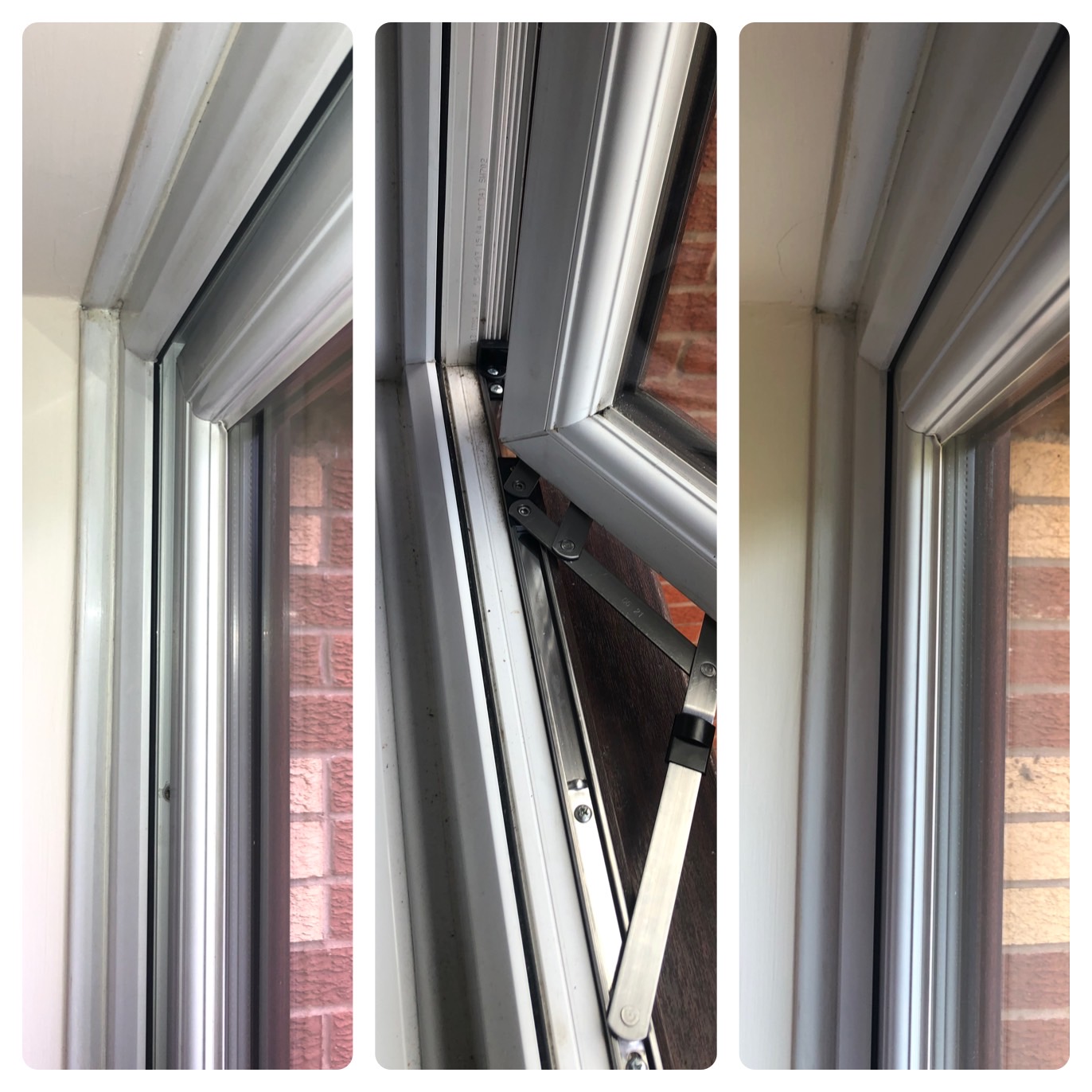
Repairing a troublesome window
A window that sticks, catches, drops, rattles or will not close properly may have a hardware, alignment, seal or frame problem. Window repair starts with finding which part is preventing the opening from working as intended. We look at the handle, hinges, stays, locking points, seals, beads and frame before deciding whether an adjustment or replacement part is sensible.
A difficult window does not always need replacing. Equally, not every fault can be corrected with a quick adjustment. We do not force a handle, promise a repair before seeing the condition, or recommend work that cannot leave the opening secure. Key Window Care provides repairs to existing windows and double glazing; we do not carry out complete window installation.
What the symptoms can tell us
A handle that turns but does not engage can point to a worn gearbox, spindle or locking mechanism. A sash or casement that rubs may have shifted, dropped on a hinge or become distorted. Draughts can come from seals or alignment; a failed sealed unit is a separate glazing fault that can cause misting or clouding. Water at the bottom edge can involve drainage or external details. These are clues rather than a diagnosis; several faults can appear together.
Tell us whether the problem is new or gradual, whether it changes when the weather is cold, and whether the window locks at all. Do not use excessive force or wedge an opening that is part of a safety or escape route. If a high-level window is unsafe to reach, photographs from a safe position are more useful than an improvised ladder.
How we check the window
We operate the window carefully, where it is safe to do so, and observe the movement, closing pressure and locking action. We inspect visible hardware and the relationship between the sash or opening light and its frame. We look for loose fixings, worn contact points, damaged seals, blocked drainage and signs that the frame has moved. A repair may involve adjustment, a replacement hinge, handle, stay or locking part, or separate glass work.
A photograph cannot show the full movement of a window, so a firm recommendation may need an arranged visit. Send the whole window, the handle side, the hinge or stay if visible, and any gap or damage close-up. We will distinguish what the photographs show from what needs checking in person. That makes the quote more honest and reduces the risk of ordering the wrong part.
Typical repair work
Suitable work may include adjusting the opening, replacing a handle, renewing a hinge or stay, replacing a locking mechanism, or replacing a failed sealed unit. The part must suit the existing profile and fixing positions. We check operation after the repair and make sure the opening closes and latches as expected. If the frame or surrounding structure is the cause, a hardware swap alone may not solve it.
We keep the work focused on the affected window and explain any limitation we find. Some older or unusual parts may need identification before they can be sourced. We do not claim every fault is repairable, and we do not fit a part simply because it looks similar. Compatibility and safe operation matter more than a quick visual match.
When repair is sensible
Repair is often worth considering when the frame is sound, the opening is correctly sized and the problem is confined to glazing or hardware. It can avoid the disruption of removing a complete window and keep a finish that already suits the property. Replacement becomes a wider question when there is severe distortion, decay, structural damage, persistent water ingress or an opening that cannot be made secure.
The Glass and Glazing Federation advises looking at the condition, energy performance and impact of a window before deciding. Existing frames and replacement glazing still need to meet relevant safety requirements. We can assess the repair within our service and tell you when a complete replacement, building-control question or another specialist is more appropriate.
What affects the quote
The quote depends on the fault, hardware type, access, number of openings, part availability and whether adjustment or replacement is needed. A window that appears to need a handle may also have a stiff mechanism or alignment issue. A hinge repair can involve safe support of the opening. We do not publish a single price because these variables change the work substantially.
For a useful first message, include the postcode, room or elevation, the window style if known, a whole-frame photograph and close-ups of the handle, hinge, lock and problem area. Say whether it opens, closes and locks. Do not dismantle hardware to identify it; an intact photograph and a description are safer. Mention if the window is above a conservatory, beside a stair or behind furniture, because safe access can affect how the work is assessed. If you are unsure of the terminology, describe what you feel and hear; plain symptoms are more useful than a guessed part name.
The visit process
We arrange a weekday visit between 8am and 5pm from our Bristol base, covering Bristol, Bath and Weston-super-Mare within a working radius of around 35 miles. There is no call-out fee. We discuss the reported symptoms, inspect the opening where safe, explain the practical options and agree the scope before carrying out the repair.
Please clear the sill and the area around the opening, secure pets and tell us about access restrictions. If the window is above a conservatory, over a stairwell or otherwise difficult to reach, say so when enquiring. We can then establish whether the required access is within the repair we can safely provide.
Looking after a repaired window
Use handles gently and keep the closing edge free from grit, paint and objects. Do not force a window that has started to bind; repeated pressure can damage the handle or locking points. Keep drainage slots clear and report water, movement or a new draught promptly. Routine cleaning and sensible operation help reveal small changes before they become a larger fault.
Key Window Care is public liability insured and repair-only. Our 10-year guarantee applies to new double glazed units only, not automatically to hardware or every window repair. We explain the relevant cover for the work agreed and remain clear about what has and has not been repaired.
A repaired window should feel more predictable, but it still needs normal care. Keep the sill clear, avoid hanging items from handles and check that the opening closes without unusual pressure. If the same symptom returns, note when it happens and send a photograph rather than repeatedly testing it. That information helps us distinguish a returning hardware issue from a change in the frame or surrounding opening.